

Executive Spotlight: Sylvia Rhone
The Woman Who Changed What Power Looks Like in the Music Industry


Photo credit: Billboard
Some people break barriers. And then some people break the same barrier so many times that the industry has no choice but to rewrite the rules entirely.
Sylvia Rhone is the latter.
A fifty-year veteran of the music industry, she is the first Black woman to chair a major record company imprint and the first Black woman to hold dual CEO and chair positions at a major label. Not once. Not twice. Three times over the course of a career that has touched every corner of the industry and shaped the sound of multiple generations.
Her story is not just inspiring. It is instructional.
Where It Started
Born in Philadelphia and raised in Harlem, New York, Rhone said her attendance at R&B shows at the Apollo Theatre was central to her belief that music is an inspirational force.
She began as a secretary for the now-defunct Buddah Records in 1974, eventually parlaying that into positions at ABC Records and Ariola Records before being promoted to director of national Black music marketing at Atlantic Records, where she would manage the careers of artists like En Vogue, Brandy, Busta Rhymes, Tracy Chapman, and MC Lyte.
MC Lyte became the first woman rapper to release a full-length album under the direction of Rhone in 1988.
She wasn’t just climbing a ladder. She was building one for everyone coming behind her.
The Elektra Era
In 1994, everything changed.
Rhone was hired by Warner Music Group chairman Doug Morris to become chairwoman and CEO of the Elektra Entertainment Group. The Los Angeles Times called Rhone the most powerful woman in the music business, citing her as the only African American and the first woman in the history of the recording industry to attain the dual title.
Rhone guided the merger of Elektra, EastWest, and Sire Records into one of Warner Music Group’s most diverse and competitive labels. She was directly involved in the launch and guidance of multiple best-selling artists including Missy Elliott, Busta Rhymes, Tracy Chapman, Metallica, Natalie Merchant, and Third Eye Blind among others.
The breadth of that roster alone tells you everything you need to know about how she operated. She wasn’t limited by genre, by sound, or by what the industry expected from a Black woman in a position of power. She signed what she believed in and built accordingly.
Universal Motown and the Next Chapter
In 2004, Rhone was appointed president of Motown Records and executive vice president of Universal Records. Under her stewardship, Motown reinvigorated both its roster and staff, re-tooling the label into one of the savvier digital music business platforms. Rhone added Akon, India.Arie, Erykah Badu, and Lil Wayne among others to the label.
During her tenure, she revitalized the roster by extending the Cash Money imprint’s reach and supporting breakthroughs for Lil Wayne, Drake, and Nicki Minaj, demonstrating her ability to foster long-term artist growth amid shifting market dynamics.
Three of the most commercially dominant artists of the last fifteen years. All developed under her watch.
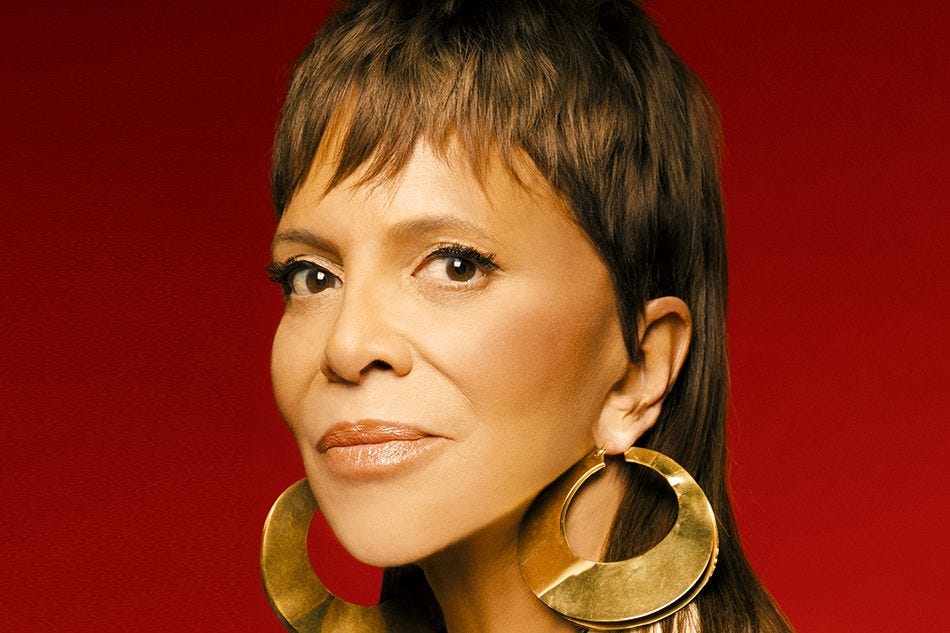
Photo credit: Variety
Epic Records — The Final Chapter
Rhone’s career spanned the C-suites of the record industry, including Universal Motown and Epic Records, where she was appointed president in 2014 and promoted to chairwoman and CEO in April 2019.
Epic Records had a banner 2024 under Rhone’s leadership. The Sony label racked up number ones from Future, who scored three chart toppers in six months; 21 Savage, who opened the year with a number one album; newcomer Tyla, who cemented the success of her global smash Water and ruled the Afrobeats charts; and Andre 3000’s New Blue Sun, an instrumental album that was nominated for Grammy album of the year.
During her tenure, Epic placed three artists simultaneously in the Billboard 200’s top 10 twice, underscoring the label’s commercial momentum in hip hop and pop rap genres.
Epic’s staff reached close to 54% female and 57% people of color under her leadership. She didn’t just change what power looked like at the top. She changed what the whole room looked like.
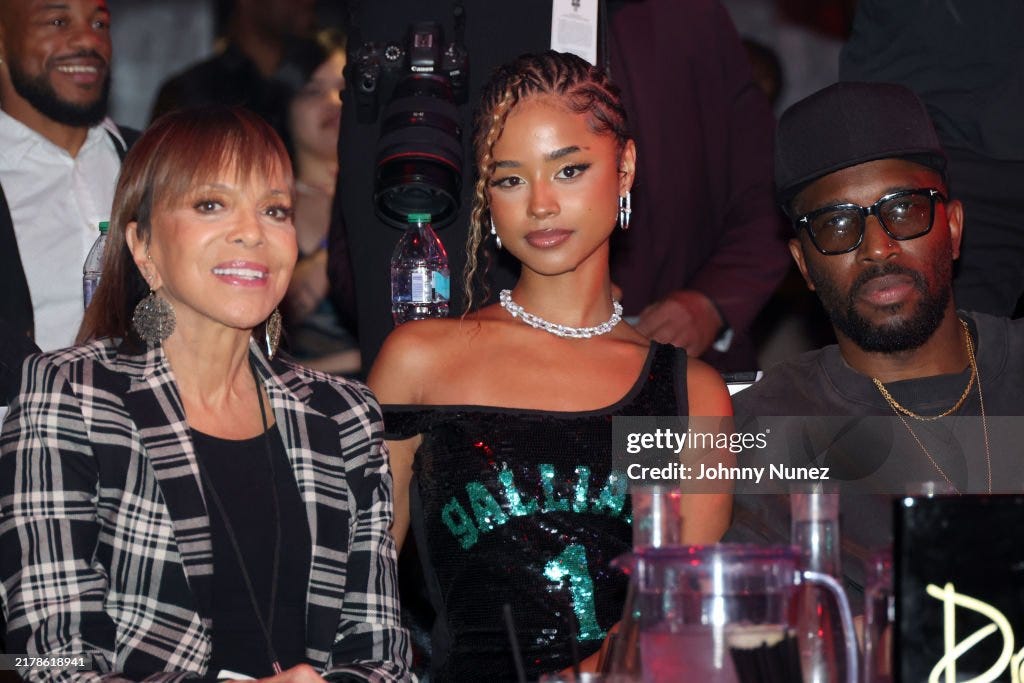
In September 2025, Sylvia Rhone announced her departure as chair and CEO of Epic Records after an eleven-year tenure at the label.
She left on her own terms. The way she did everything.
What Sylvia Rhone Teaches Us
As one of the few women and the lone Black woman to successfully helm a handful of major labels, Rhone is a role model for women seeking their own seats at the table.
But her story isn’t just a story about representation. It’s a story about longevity, adaptability, and an unwavering commitment to the artists she believed in.
She started as a secretary. She ended as the most decorated female executive in the history of the music industry. And at every stop along the way, she made decisions that prioritized the music and the people making it over everything else.
When asked about the secret to her success, Rhone said:
“I had to put away all those fears that I wouldn’t succeed and embrace the courage to move forward. I concluded that this was my chance, my time. And that’s the takeaway I would share with whoever has that doubt: Always believe in yourself and your worth.”
That’s the blueprint. Not the title. Not the label. The belief that you belong in the room before anyone invites you in.
Start Here
Sylvia Rhone spent fifty years building something that mattered. She did it with intention, discipline, and an understanding that the artists are always the mission.
Whatever you’re building in this industry, take that with you.
Looking for an EPK? The Ear Exchange has you covered. Visit our EPK page and let us help you put your best foot forward.
How can we help you?
— The Ear Exchange Where strategy meets taste.
Sources: Wikipedia | Billboard | Variety | Black Enterprise | Music Business Worldwide
